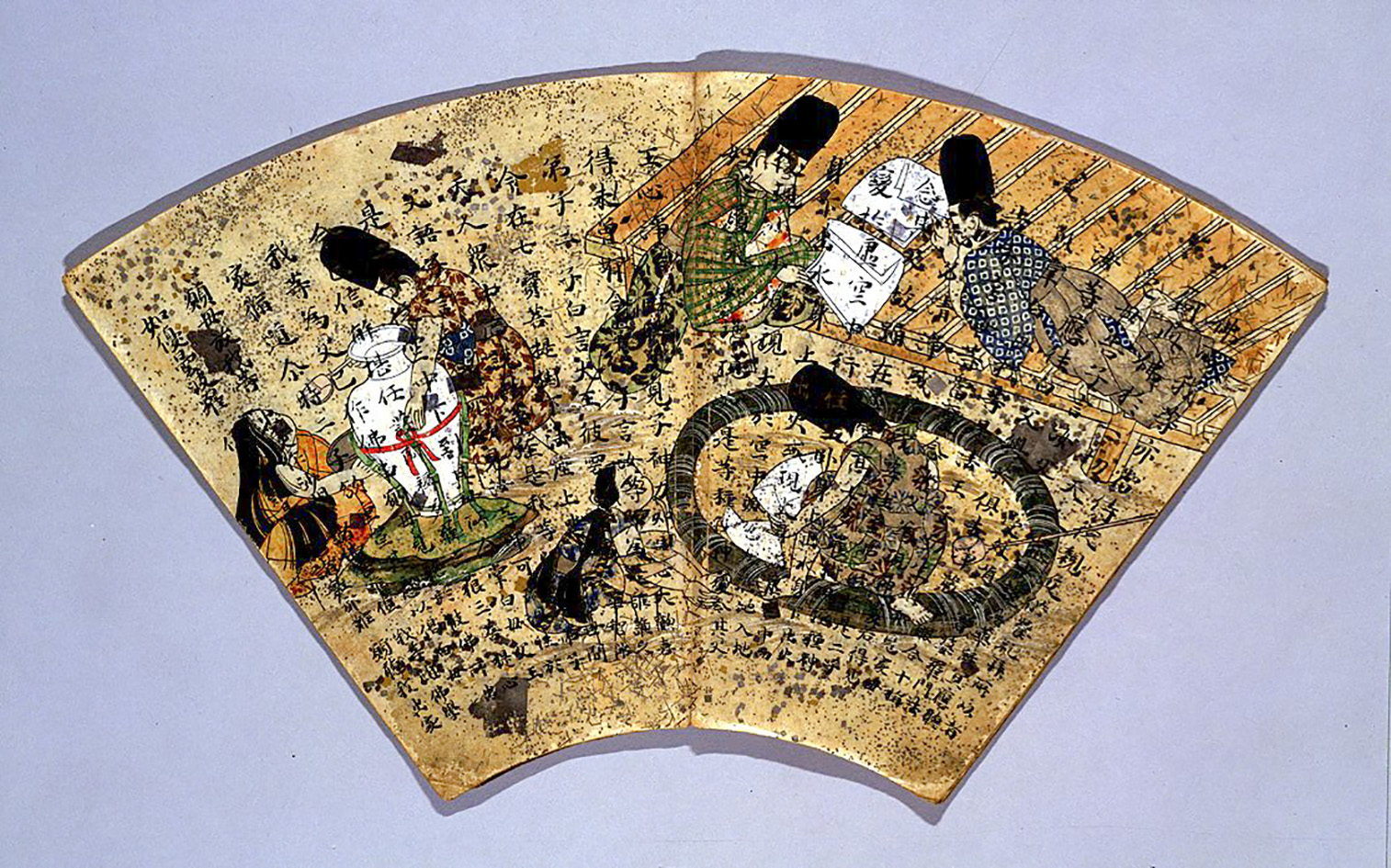
A sutra is easy to imagine as a block of solemn text. The fan-shaped Lotus Sutra booklet held by the Tokyo National Museum asks us to look again. Its pages open in the form of fans: a familiar object of daily life made into the ground for sacred writing.
The work is known as Senmen Hokekyo Sasshi, or the fan-shaped Lotus Sutra booklet. The museum dates it to the twelfth century and identifies it as a National Treasure. Its form is the first surprise. Instead of treating the sutra as separate from ordinary visual culture, the pages bring calligraphy, painted scenes, and the shape of a fan into one object.
Form changes how we read
A fan is made to open and close. It gathers a broad surface into the hand, then lets it spread out again. On these pages, that everyday movement changes the experience of scripture. Text is still text, but the reader also encounters colour, framing, and the curved edge of the sheet.
This does not mean that the manuscript makes the Lotus Sutra casual. It shows something more interesting: devotion has often used the materials and visual languages already present in people's lives. The sacred and the familiar do not have to be enemies.
Lotus Village ReadingAttention is not only a matter of what we read. It is also shaped by the form that asks us to slow down and look.
Do not replace the manuscript with a decorative fan
Because the object is visually striking, it is tempting to use any fan image as shorthand for the story. That would miss the point. This manuscript matters because a specific historical object carries both the sutra text and a particular visual practice. A decorative fan is not evidence for it.
The best way to approach it is to keep the two questions together: what is written here, and what has been made visible around the writing? The answer belongs to the manuscript itself.
Collection works are not always on permanent display. Check the Tokyo National Museum's current exhibition information before visiting, and use the museum record rather than reposted images when researching the object.
An everyday shape, carefully held
The fan-shaped pages are a reminder that cultural history is often carried by small decisions of form. A reader does not need to know every character to see that this sutra was made to be handled, opened, and regarded with care.